












































Engineering and Security of Critical Infrastructure Facilities
ACHIEVEMENTS AND PARTNERS

- 1st place in Warsaw
- 6th place in Poland
- 11th place in the overall ranking
Why study at ATA?
What can you do after this program?
Employment prospects
This program is for you if:

You are interested in the security of facilities vital to the country
This specialization is for people who want to understand how facilities of key importance to the state and society are designed, protected, and maintained. If you’re interested in energy, transport, water infrastructure, telecommunications, healthcare, public administration, data centers, or military infrastructure, this program will let you look at these areas from the perspective of an engineer responsible for security.
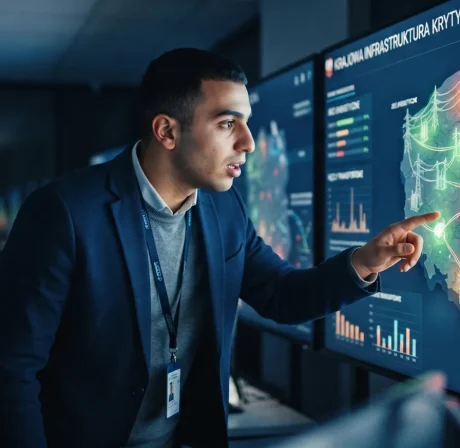
You want to combine classic construction knowledge with modern technologies
This program is a good fit if you’re interested in civil engineering but want to develop skills that go beyond standard facility design. The specialization combines structural knowledge with the digitalization of facility management, monitoring, diagnostics, risk analysis, and technologies used in critical infrastructure protection.

You're interested in nuclear and renewable energy and new energy technologies
This specialization is for you if you want to develop in areas related to the energy transition, transmission networks, energy storage, hydrogen, nuclear power, and new-technology infrastructure. These are fields that will require engineers capable of designing safe, durable, and resilient facilities.
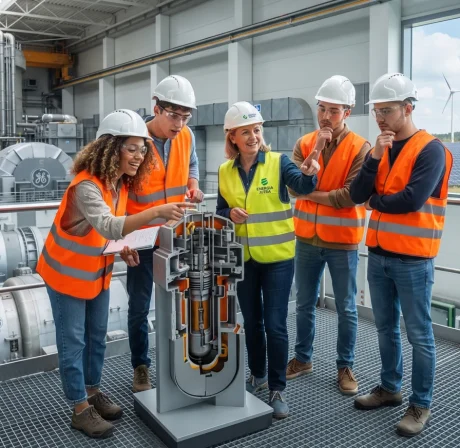
You want to design structures resistant to harsh conditions and hazards
If you’re interested in structures resistant to extreme events, protective and shelter facilities, and infrastructure designed with people’s safety in mind, this specialization is a great match. It will give you knowledge useful for designing facilities that must meet higher requirements than standard buildings.
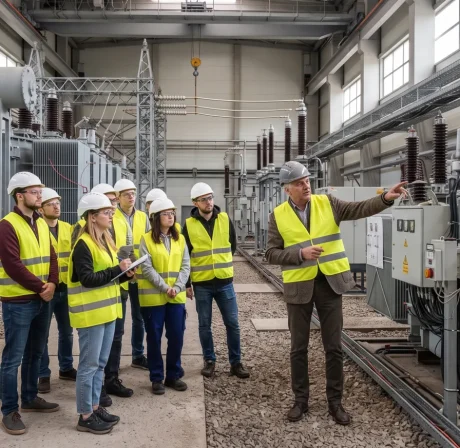
You want to study a specialization that addresses the strategic challenges facing Poland and the EU
This program is for people who want to gain skills needed in sectors shaped by the energy transition, climate change, digitalization, the development of critical infrastructure, and growing security requirements. The specialization has the potential to become one of the most promising within the Civil Engineering field, as it responds to real labor market needs and the long-term challenges facing the country.
Program and structure of studies
practical profile of education
Field of study
Civil engineering
ECTS credits
210
Duration
3.5 years
Obtained academic title
Engineer
Study Program
Block I. Fundamentals
Fundamentals of critical infrastructure; State security system, crisis management, and energy security; Infrastructure security management.
Block II. Energy Infrastructure
Conventional, nuclear, and renewable energy facilities; Electricity grids, fuel infrastructure, and resilience of transmission systems; Energy storage, hydrogen, and new energy technology infrastructure.
Block III. Structural Design
Design of critical energy infrastructure facilities; Design of critical transport, water, and municipal infrastructure; Structures resistant to extreme hazards; Protective and shelter construction.
Block IV. Hazards
Critical infrastructure hazards.
Block V. Modern Technologies
Monitoring, diagnostics, and maintenance of critical infrastructure (IoT, AI, Digital Twin); Hazard modeling and simulation.